Driving In Italy
To the newcomer, traffic in Italy can seem a bit chaotic and intimidating at times. Rules are interpreted very flexibly and traffic functions in an unorthodox but fluid way. The further south you travel the more this can be the case.
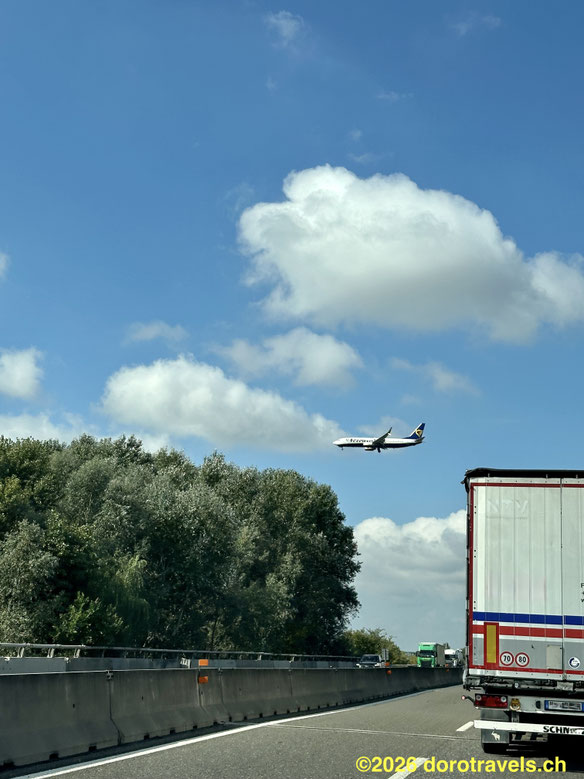
On the SS16 near Bari in Puglia
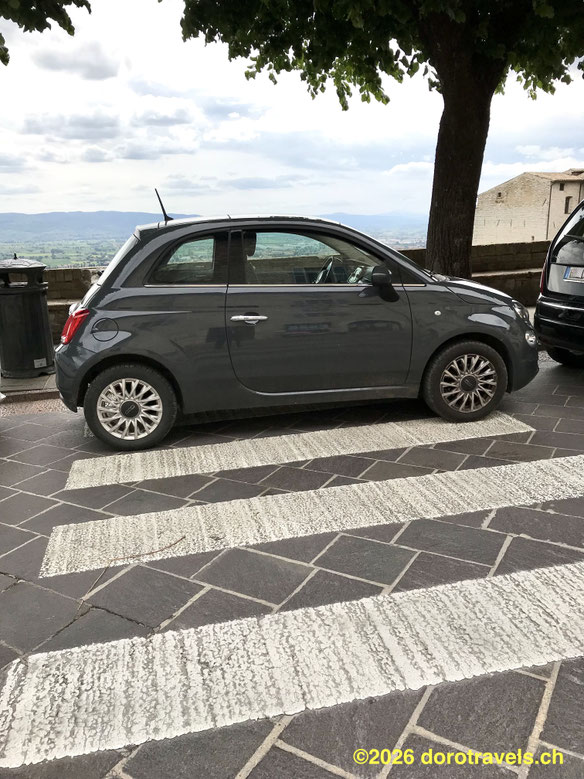
Here is what to expect: Speed limits and road signs are quite often not respected. Drivers overtake when it is not permitted. Illegally or awkwardly parked cars are frequently an obstacle and slow down circulation, because people leave their vehicles on the pedestrian crosswalk, the curb, in a roundabout, directly in front of a shop entrance, or partially on the roadway.
Major road junctions without traffic lights can get congested with everyone pushing, trying to make it across. The miracle of this approach is that somehow it functions. To keep going confidently without insisting too much appears to be the path to success here.
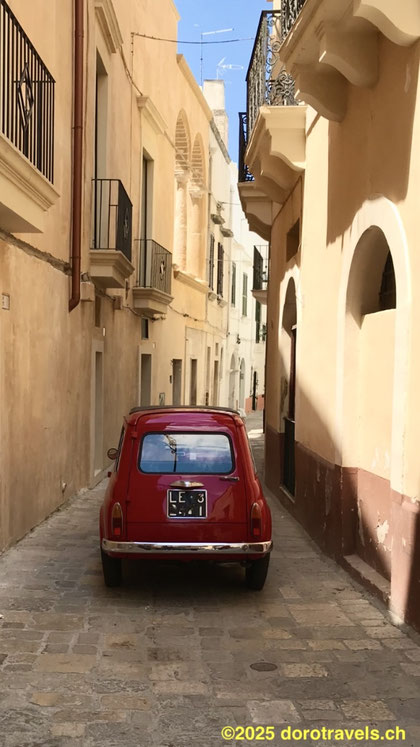
Sometimes You Need A Small Car To Make It Through The Narrow Streets
Some foreigners get frustrated by these situations, because they aren't accustomed to the Italian way of driving. Here is my advice: stay calm, don't get upset, fore you might get upset a lot during your precious vacation time. Be generous with other drivers. Be flexible and make room for them on the road (they will generally do the same for you) and accept the fact that this is their country. Stay attentive, because you may have to adapt to unexpected situations and react quickly quite often.
In the many years that I have traveled through Italy, I have not encountered any serious aggression from other motorists. People throw their arms up in excitement from time to time, but that's just a way of letting off steam.
Overall, I find Italian drivers to be cooperative, quick in their reactions and kind to tourists. Deviating from the rules a bit here and then appears to give everyone a sense of freedom.
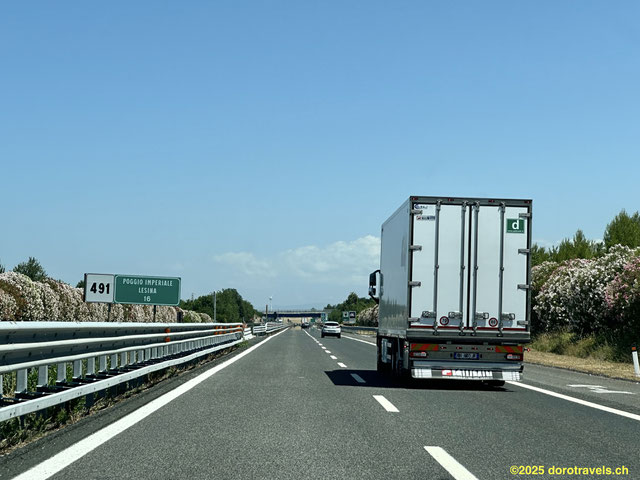
A Relaxing Drive On The A14 Motorway In Northern Puglia
Important to know:
Italians may not always take speed limits and road signs too seriously, but there are two things they do respect: ZTL zones and toll road payments.
ZTL zones:
These are inner city areas temporarily restricted to traffic. Signs will show you when it is allowed (or not allowed) to enter these video monitored zones by car. Fines are heavy and will be sent to vehicle owners abroad. High surcharges are possible (please see below).
Toll road payments:
It is important that you pay your toll (as small as it may be) before leaving a toll station. If you have problems of any kind with your payment, request help from the employee at the pay station or use the intercom. Fines will be sent to your country, often months or even a year later. They are sometimes handled by third parties and excessive surcharges are possible. If you don't pay, you are likely to run into trouble at toll stations or with the police next time you visit Italy.
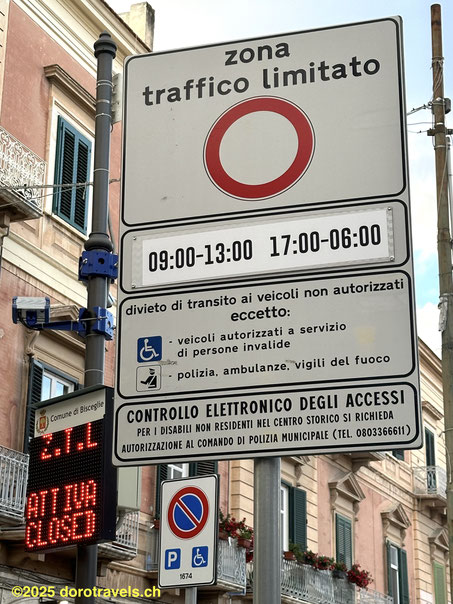
In this case the ZTL Zone is active (Attiva), cars cannot enter
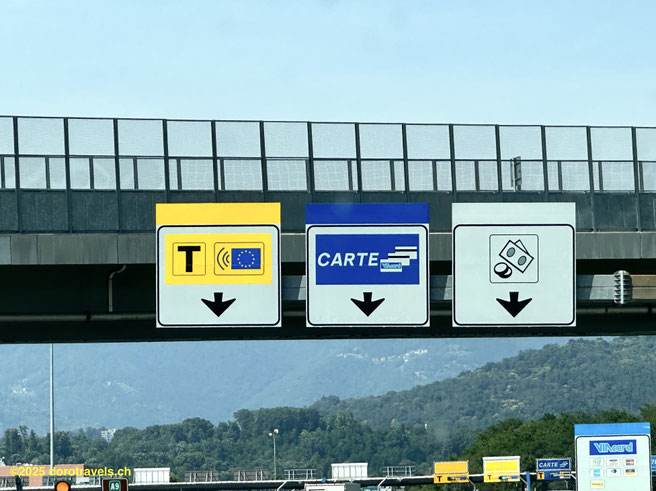
Driving Up To A Toll Station With The Possibility To Pay Via Telepass, by Credit Card Or Cash
Free-flow-systems:
On a few highways in Northern Italy a free-flow system has been installed, i.e., toll is charged electronically via number plates. The A36, or Autostrada Pedemontana Lombardia, near Como north of Milan, and the A33 near Asti in Piedmont are examples of this.
On these roads there are no physical toll booths. You must pay your toll online, or at special service points within 15 days. For more information please consult the internet or the automobile clubs in your country.
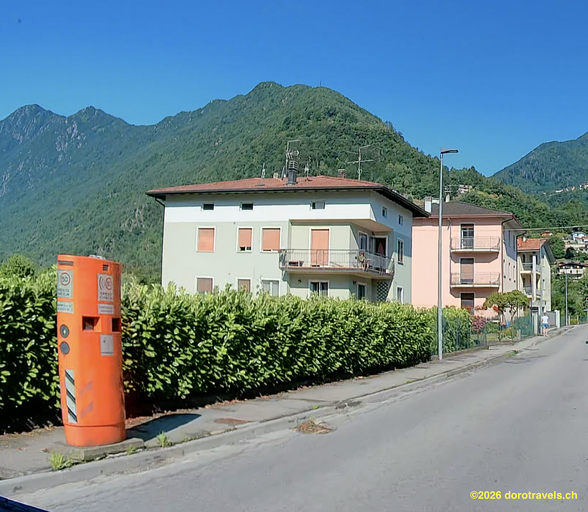
Speed Cameras:
There are more radar traps in Italy than in any other European country, especially in Northern
and Central Italy. Many are dummies, most are
for real. Fines are heavy and will be sent to your home in your country. The orange speed traps are indicated by road signs, so do watch out for those. It's not uncommon to see two or three speed cameras in a row.
Extra Tips
Traffic Jams:
Avoid being on the road on June 2nd, (Festa della Repubblica) when traffic congestion is enormous. Heavy traffic can also be expected throughout the month of August, when Italians take their summer vacation.
The “Mirror-Trick”:
This is a highway scam where a sudden loud noise occurs (an object gets thrown at your vehicle) and people in a passing car urge you to pull over. The crooks then try to “prove” you caused “damage” to their car and pressure you into making a cash payment.
Do not pull over, do not pay, do call this European Emergency number: 112.
112 Where ARE U, The Official Emergency App For Italy:
It connects you directly with a multilingual operator at the emergency number 112 (Police, Ambulance, Fire Brigade), transmits your exact GPS coordinates, allows silent calls, has a chat function, lets you store personal information such as emergency contacts, is free, easy to use, and works in most Italian regions.

One Of Three Calatrava Road Bridges Near Reggio Emilia In Emilia-Romagna
Would You Like To Send Me A Message?
I would love to hear from you. Your comments will be treated confidentially and will not be published.